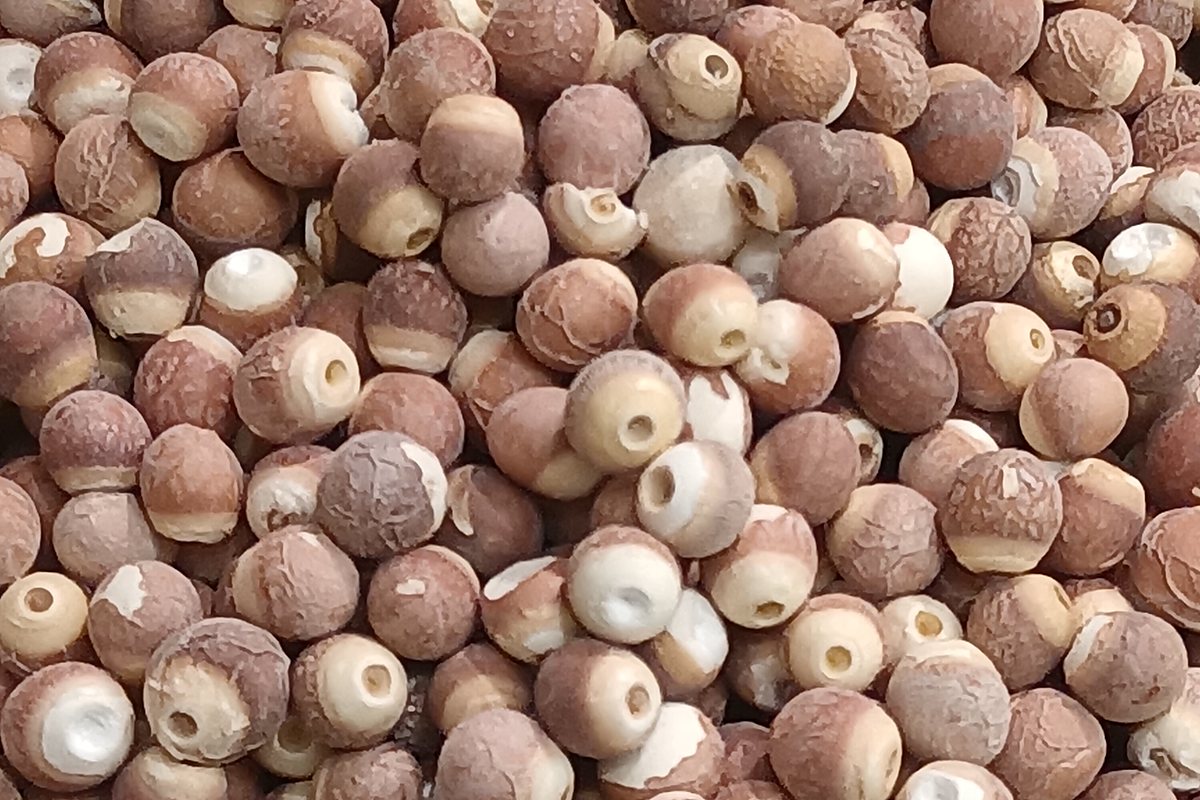
Makhana Buyer Summary
5 Suta Makhana Explained should be read as a commercial grading guide, not a statutory standard. The APEDA/Crisil dashboard uses a practical size framework from 4 Suta to 7 Suta, with 6 and 7 Suta positioned toward premium/export use. A buyer should still confirm actual millimetre range, colour, moisture, broken percentage and accepted tolerance in the quotation.
What Importers Should Know
For grade language, the dashboard's 4/5/6/7 Suta size table is used as a commercial reference. It is deliberately described as a buyer framework and not as a government-mandated universal standard.
Importer Buying Relevance
- request grade by both Suta name and millimetre range.
- confirm premium-grade availability before quoting a retail or private-label pack.
- agree tolerance for broken kernels and mixed sizes before shipment.
Detailed Buyer Guidance
Suta grade language is useful because it gives buyers a shared commercial shorthand. Larger, more uniform popped makhana generally commands a stronger position in premium snacking, gift packs and private-label programs, while smaller sizes may suit economical channels, processing or ingredient applications. The buyer should still avoid comparing only grade names without millimetre range, tolerance and actual lot photos.
The clean way to specify grade is to request both the Suta name and the size band used by that supplier, then add appearance, colour, moisture, broken percentage, foreign matter and pack format. If a quote only says 'premium' or 'export quality' without measurable values, it is not ready for serious comparison.
Specification Notes
- Product form: raw seed, popped makhana, roasted snack, flavoured pack, flour, powder or ingredient.
- Grade and size: Suta reference plus millimetre range where relevant.
- Grade tolerance: acceptable mixed-size percentage and whether premium size must be uniform across cartons.
- Quality tolerance: moisture, colour, broken percentage, foreign matter and lot consistency.
- Packing: bulk carton, inner liner, retail pack, private-label pack or buyer-specific format.
- Trade details: quantity, destination, Incoterm, inspection need and target shipment window.
Practical Reference Table
| Commercial grade reference | Source size band | Buyer interpretation |
|---|---|---|
| 4 Suta | 12-15 mm | Economical and widely used in value-added or cost-sensitive programmes |
| 5 Suta | 15-18 mm | Regular snacking and distribution programmes |
| 6 Suta | 18-21 mm | Premium snacking and export-focused assortments |
| 7 Suta | Above 21 mm | Extra-large, premium and high-visibility packs |
Procurement Questions
- What exact product form and grade is being quoted?
- What millimetre range and tolerance does the supplier use for this Suta grade?
- Does the sample represent the shipment lot or only a reference sample?
- Which quality parameters will be written into the offer?
- What packing configuration protects the product during transit and storage?
- Which documents, tests and inspections are included, optional or buyer-paid?
Common Mistakes To Avoid
- Comparing offers without matching grade, size range, packing and inspection assumptions.
- Treating historical market data as a live quote.
- Accepting broad words such as premium or export quality without measurable tolerances.
- Leaving moisture, broken percentage and foreign matter out of the specification.
- Buying only by Suta name without confirming the supplier's millimetre band.
Buyer FAQ
Are Suta grades legal standards?
They are treated here as commercial size references, not statutory grades. Confirm millimetre range in the quote.
Is 5 suta makhana explained a current-price page?
No. Any price or market reference is historical or source-period specific unless a buyer requests a fresh quotation.
Can this page prove a supplier is certified?
No. Certification, factory ownership, organic status and shipment capacity must be verified for each supplier and lot.
Which source should be trusted if numbers differ?
Prefer official or institutional sources first, preserve the reporting period and explain conflicts instead of hiding them.
What should a buyer do next?
Send a specification-led RFQ with product form, grade, quantity, destination, packaging and testing requirements.